CAPTIONED
Every word on a screen
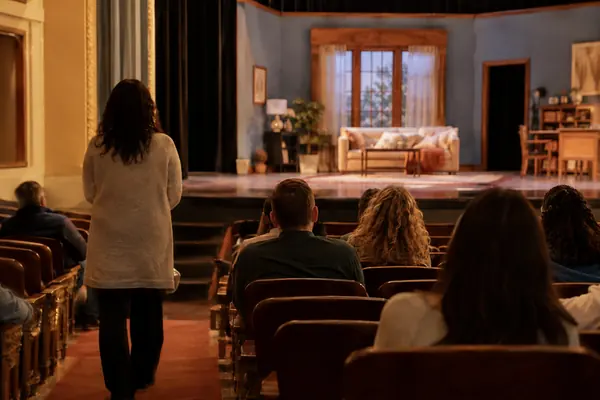
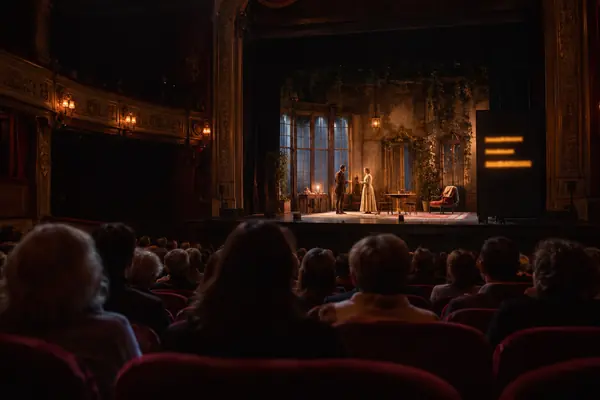
Dialogue and key sound effects appear as text on screens, usually beside the stage. Stagetext says it costs you nothing extra: the venue covers it.
Compare the options doodleplays
ACCESSIBLE THEATRE, EXPLAINED
The same play, four different ways in.
Find the right one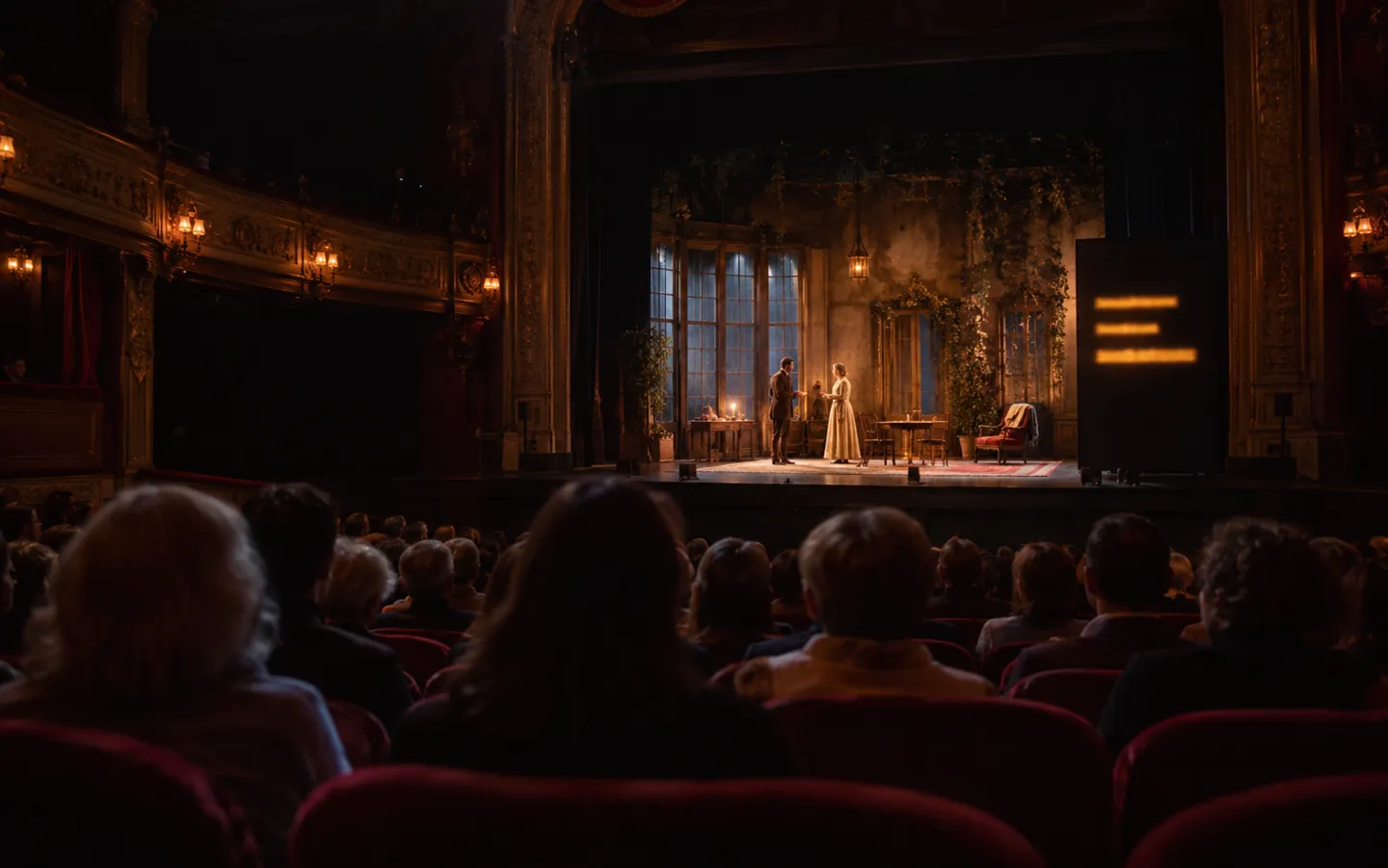
ASK THEbox office
Captions on screens beside the stage. A describer's voice in a headset. A sign language interpreter in the light. A softer, more forgiving auditorium. Many UK theatres now schedule these as set performances: here is what each one means.
At a glance
18 million
UK adults who are deaf, deafened or hard of hearing
Stagetext, a deaf-led charity, says all of them can benefit from captions. It captioned 436 theatre shows in 2024/25, at 143 venues, and 45% of performances were outside London.
DEAF AND HARD OF HEARING · STAGETEXT
≈ 60%
UK theatres offering no access for blind and visually impaired people
VocalEyes, the audio description charity, puts the figure at around 60% of theatres, and says almost two million people in the UK live with sight impairment.
BLIND AND PARTIALLY SIGHTED · VOCALEYES
TWO NUMBERS WORTH KNOWING
One figure on who captions can help,
one on how far access still has to go.
The first captioned theatre performance in the UK took place at the Barbican in 1999, when a US company captioned Antony and Cleopatra. Stagetext's own first captioned show followed there on 15 November 2000.
A QUICK ACCESS CHECK
Pick a type of performance to see what happens on the night. The bar shows roughly how much the show and the auditorium are changed.
Descriptions follow the National Theatre's access pages and Stagetext's guidance. What is offered varies by theatre and by show.
THE SHORT ANSWER
Access is usually booked as a set date
in a show's run, so check the listings early.
CAPTIONED
Dialogue and key sound effects appear as text on screens, usually beside the stage. Stagetext says it costs you nothing extra: the venue covers it.
Compare the optionsAUDIO DESCRIBED
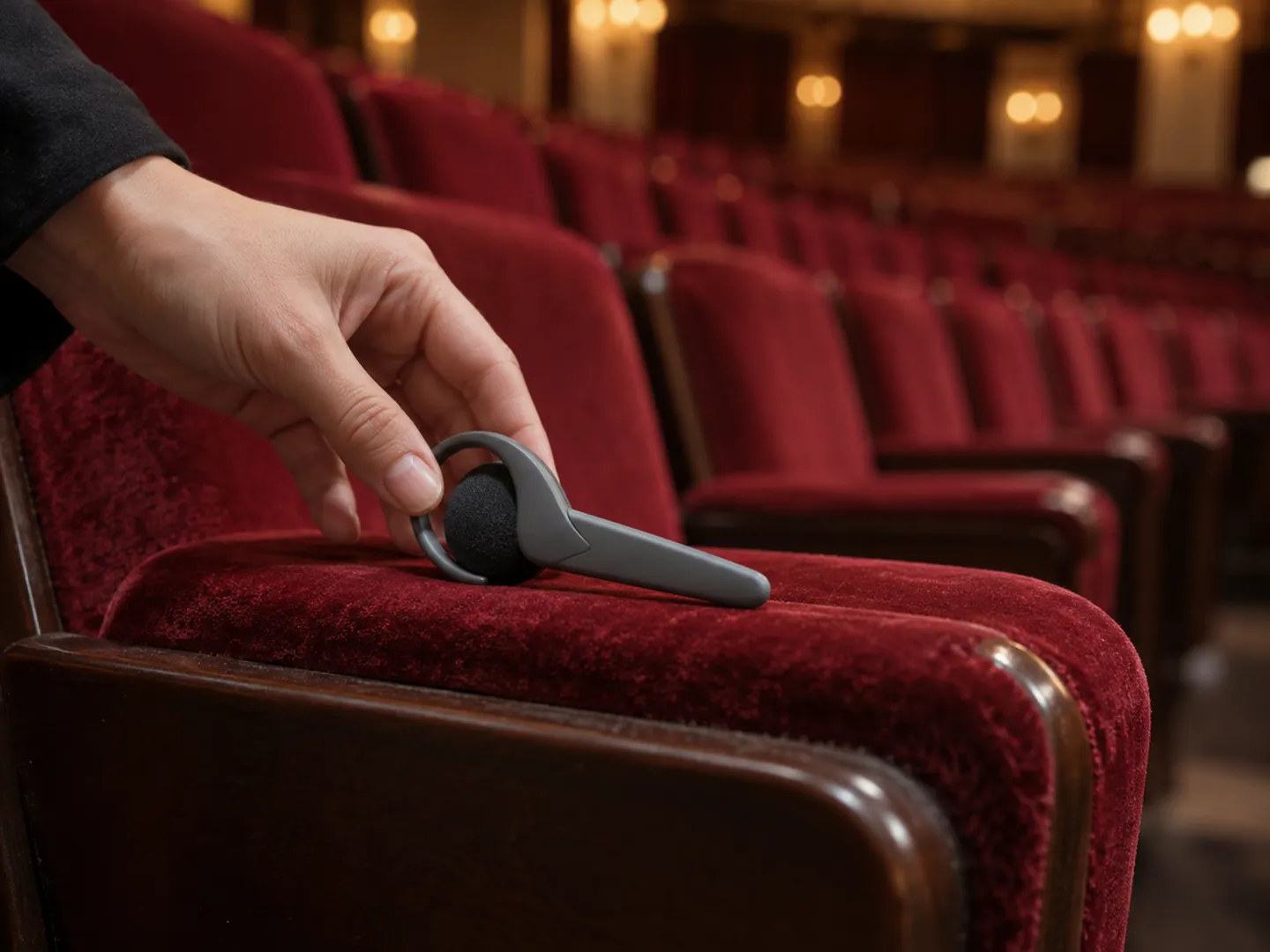
Through a headset, a live describer explains movement, costumes, lighting and set changes in the pauses. Some theatres add touch tours before the show.
How to bookRELAXED
Lighting and sound are adjusted, noise and movement are fine, and you can step out and come back in. Helpful for anyone with sensory sensitivities.
See the numbers
FOUR STEPS TO A GOOD NIGHT
Access performances are usually set dates within a run, and the best seats for captions or an interpreter are limited. A little planning makes the night easy.
Each show's page normally lists its captioned, signed, described and relaxed dates. Stagetext lists captioned shows, and Official London Theatre publishes an Access Performance Guide.
Theatres often hold seats with the best view of captions or the interpreter. Email or call the box office if the seating plan is not clear.
Venues such as the National Theatre run an access scheme, and some offer adjusted prices for you and a companion. Policies vary, so ask.
Stagetext suggests contacting the venue directly: hearing that there is demand is what prompts a theatre to add a captioned date.
CAPTIONS OR SURTITLES?
Surtitles are usually translations, for opera or plays in a foreign language. Stagetext explains they are made for hearing audiences and leave out things like character names and offstage sounds.
Theatre captions are the verbatim words, cued live by a captioner, with speaker names and sound effects included. Stagetext adds that many hearing people find them useful too, for strong accents or a missed line.
Questions
No. Stagetext says the venue covers the cost of captioning and it is not passed on to you. Many theatres also offer discounted rates for access users and companions, though policies vary.
Stagetext says feedback from audiences shows most people either find captions useful, for example with difficult accents, or enjoy the show without finding them a distraction.
Some theatres offer a tour before an audio-described performance, so blind and partially sighted visitors can explore parts of the set, props or costumes. The National Theatre offers touch tours and audio notes beforehand.
Light and sound effects are adjusted for people with sensory sensitivities, noise and movement in the auditorium are fine, and you can leave and return. Some venues also provide a chill-out space.
Stagetext says theatres may reserve areas for caption users but, as long as they are not sold out, they will not separate you from friends and family.
Sources
ABOUT THIS NAME
doodleplays.com is part of the DoodleSale portfolio. It isn't in an auction right now, but you can ask about leasing it.